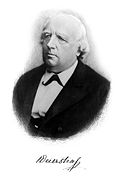
Max Müller
Alemanha · No mapa · Acadêmicos · 1823 - 1900 · 76 anos
Friedrich Max Müller (Dessau, 6 de dezembro de 1823 - 28 de outubro de 1900) foi um linguista, cientista das religiões, orientalista e mitólogo alemão. Aluno de Franz Bopp e de E. Burnouf, retomou o estudo do Avestá e a publicação do Rigueveda-Samita, que manteve de 1849 a 1874 (6 volumes).
Texto de Wikipedia, CC BY-SA 4.0
Max Müller: cerca de 268 leituras por dia, em 51 idiomas.
Um dia típico, 30 dias até 19 de novembro de 2026
O dia do meio entre os dias contados, então uma única semana de notícias não consegue alterá-lo. A linha abaixo mostra os últimos 400 dias, um ponto por dia.
Algo errado?Uma vida em datas
Pessoas ao redor de Max

 Friedrich Wilhelm Joseph Schelling Deu aulas a Max
 Friedrich Rückert Deu aulas a Max
 Hermann Lotze Deu aulas a Max
 Eugène Burnouf Deu aulas a Max
 Georg Bühler Estudou com Max
 Johann Gottfried Jakob Hermann Deu aulas a Max
- Christian Hermann Weisse Deu aulas a Max
 Moriz Haupt Deu aulas a Max
- Reinhold Klotz Deu aulas a Max
Pais

 Max Müller
Cônjuges e companheiros
Filhos

É a família toda?
Só aparecem os parentes que têm perfil aqui, então a família pode ser maior. Uma ligação aqui também pode estar errada. Um casamento só aparece como encerrado quando o fim dele está registrado, então um cônjuge mostrado aqui pode ser um ex-cônjuge.
Corrigir esta famíliaMídia e música
Fotos 2


Nas próprias palavras 5
, There was a time when the ancestors of the Celts. the Germans, the Slavonians. the Greeks and Italians, the Persians and the Hindus. were living together beneath the same roof.
The translation of the Veda will hereafter tell to a great extent on the fate of India and on the growth of millions of souls in that country.
We all come from the East - all that we value most has come to us from the East, and in going to the East...
Prêmios
Sobre esta pessoa
Sua obra principal é a coleção Livros Sagrados do Oriente (50 volumes publicados de 1879 a 1910; com traduções eletrônicas a partir de 1997), fonte essencial da história das religiões e da mitologia comparada, serviu de base para a criação da disciplina acadêmica Ciência da Religião por Müller.
Texto de Wikipedia, CC BY-SA 4.0